A medical-grade skincare routine layers prescription-strength actives — retinoids, vitamin C, peptides — under daily broad-spectrum SPF, and it adds in-office resurfacing like a chemical peel or microneedling every 4 to 6 weeks to do what topicals alone can't reach.
The part most people skip is sequencing: adding every active at once in 2026 is the fastest way to wreck your skin barrier and abandon the routine by week three.
- A medical-grade skincare routine pairs daily actives with in-office treatments every 4-6 weeks, not retail products alone.
- Retinoids need 8-12 weeks of consistent use before texture and tone actually change.
- Broad-spectrum SPF 30+ every morning is non-negotiable, cloud cover or not.
- Introducing one active at a time is the single biggest predictor of whether a routine sticks past month one.
- Luxus Aesthetics builds each plan around your current skin condition, not a generic product line.
Why this matters
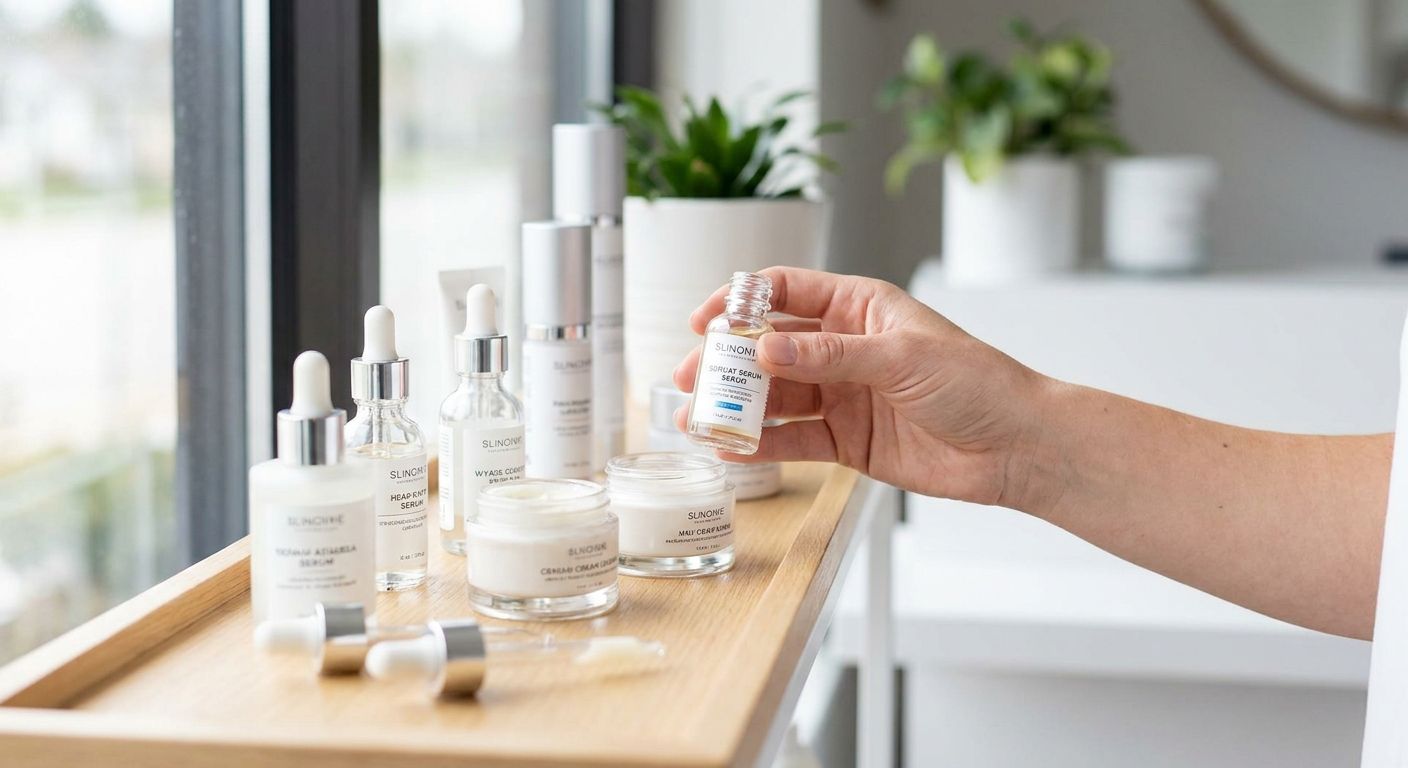
Drugstore skincare is formulated for shelf stability and broad tolerance, which means the active concentrations are diluted enough that almost nobody reacts badly and almost nobody sees dramatic change either. Medical-grade skincare, by contrast, uses concentrations and delivery systems tested to actually penetrate the skin barrier — which is exactly why it needs a provider's input, not a guess.
Luxus Aesthetics builds routines around what your skin is doing right now: active breakouts, sun damage, rosacea flare patterns, post-procedure recovery. A routine built for someone with rosacea looks nothing like one built for someone recovering from acne scarring, and using the wrong one can undo months of progress in a matter of weeks.
How do you build a medical-grade skincare routine?
Build it in this order, and don't skip steps to get to the "good stuff" faster:
- Get a skin assessment first. A provider identifies your skin type, current barrier condition, and any contraindications before recommending a single product.
- Start with a gentle, non-stripping cleanser. Twice daily, morning and night — this is the step people cut corners on and it shows up as sensitivity within days.
- Introduce one active at a time. Retinoid or peptide serum first, worn 2-3 nights a week for the first two weeks before increasing frequency.
- Layer an antioxidant serum in the morning. Vitamin C or a peptide blend protects against the environmental damage SPF alone doesn't fully block.
- Moisturize to rebuild the barrier. Every single application of a retinoid strips the barrier slightly — moisturizer isn't optional, it's the repair step.
- Apply SPF 30+ every morning, no exceptions. This is the one step that determines whether the rest of the routine holds up or gets undone by UV exposure.
- Schedule in-office resurfacing every 4-6 weeks. Chemical peels or microneedling sessions do the collagen remodeling and pigment correction topicals can't touch on their own.
Comparison: topical-only vs. medical-grade routine with in-office treatments
| Topical-only routine | Medical-grade + in-office | |
|---|---|---|
| Active concentration | Lower, broad-tolerance formulas | Higher, provider-dosed |
| Timeline to visible change | Slow, often stalls | 8-12 weeks for actives, faster with peels/microneedling |
| Collagen remodeling | Minimal | Addressed via microneedling every 4-6 weeks |
| Pigment correction | Gradual, inconsistent | Accelerated with chemical peels |
| Provider oversight | None | Ongoing, adjusted per visit |
Weeks 1-4: building tolerance without irritation
The first month is about tolerance, not results. Retinoids and peptide serums applied 2-3 nights a week let the skin adjust before ramping up frequency, and this is where most at-home routines fail because people either quit at the first sign of flaking or push too hard too fast. Expect mild dryness or a small "purge" period in the first 2-4 weeks — that's the skin cycling faster, not a sign to stop.
Month 2: adding your first in-office treatment
Once the skin tolerates daily actives, this is when a chemical peel or the first microneedling session gets added. For anyone dealing with acne scarring or textural concerns, microneedling for acne scars works by triggering controlled collagen production that topicals can't replicate, and results build cumulatively across sessions spaced 4-6 weeks apart. For discoloration and uneven tone, chemical peels for hyperpigmentation accelerate cell turnover in a way daily serums take months to approach.
Month 3 and beyond: locking in results and maintenance
By month three, most people are on a stable rhythm: daily actives at full frequency, SPF every morning, and an in-office treatment every 4-6 weeks depending on the concern being treated. This is also when aftercare matters most — how to care for skin after a chemical peel covers the barrier-repair window that determines whether the peel's results actually hold.
The single biggest mistake at this stage is stopping SPF once results show up — sun exposure undoes pigment correction faster than any serum can rebuild it.
“If you're not wearing SPF every single morning, the rest of the routine is just maintenance on damage you're still causing.”
Why results vary from person to person
A medical-grade skincare routine doesn't produce identical timelines for everyone. The variables that actually move the needle:
- Baseline skin condition — active acne, rosacea, or sun damage all change the starting point and the pace of visible change.
- Retinoid strength and frequency — a routine built around tretinoin moves faster than one built around a gentler retinol.
- Consistency — skipping SPF even a few days a week measurably slows pigment correction.
- In-office treatment spacing — sessions too far apart (beyond 6-8 weeks) lose cumulative benefit.
- Underlying skin conditions — rosacea and eczema need barrier-first protocols before actives get introduced at all.
- Sun exposure and altitude — higher UV exposure accelerates the damage a routine is trying to reverse.
Get your routine assessed by a provider
A skin consultation identifies what your routine actually needs before you buy anything.
How long does it take to see results from a medical-grade skincare routine?
Retinoids and peptide serums take 8-12 weeks of consistent use before texture and tone changes are visible, while in-office treatments like chemical peels or microneedling show incremental improvement after each session, with cumulative results building over 3-4 sessions spaced 4-6 weeks apart.
Is medical-grade skincare worth it compared to drugstore products?
Medical-grade skincare is worth it when the concern is active — acne scarring, hyperpigmentation, rosacea, or early aging — because the concentrations and delivery systems are formulated to actually change skin structure, not just moisturize the surface. For general maintenance with no specific concern, a simpler routine may be enough.
Can you combine Botox or fillers with a medical-grade skincare routine?
Yes, Botox and fillers pair with a skincare routine without conflict, since injectables address volume and muscle movement while skincare addresses texture, tone, and barrier health — they're solving different problems, not competing ones.
FAQ
How much does a medical-grade skincare routine cost in 2026?
Cost depends on which actives and in-office treatments are included, since a topical-only plan runs far less than one that adds monthly chemical peels or microneedling. A provider consultation gives an accurate breakdown based on your specific skin condition.
What's the difference between medical-grade and drugstore skincare?
Medical-grade skincare uses higher active concentrations and delivery systems tested to penetrate the skin barrier, while drugstore formulas are diluted for broad tolerance. That's why medical-grade routines need provider guidance and drugstore ones generally don't.
Do I need a dermatologist to start a medical-grade routine?
A licensed provider, whether a dermatologist or a medical spa provider, should assess your skin before recommending prescription-strength actives. Starting actives without an assessment risks irritation, especially for rosacea or acne-prone skin.
How often should I get a chemical peel or microneedling session?
Chemical peels and microneedling sessions are typically spaced 4-6 weeks apart for cumulative collagen remodeling and pigment correction. Spacing sessions further apart loses the cumulative benefit between visits.
Can a medical-grade routine fix hyperpigmentation?
Medical-grade routines address hyperpigmentation through a combination of daily actives like vitamin C and retinoids plus in-office chemical peels, which accelerate cell turnover faster than topicals alone. Consistent SPF use is required or the pigment correction gets undone by continued sun exposure.
Is retinol the same as a prescription retinoid?
No, retinol is a weaker, over-the-counter form that converts to active retinoic acid more slowly, while prescription retinoids like tretinoin work faster and stronger. Medical-grade routines typically use the prescription form under provider guidance.
What happens if I skip SPF while on a medical-grade routine?
Skipping SPF undoes pigment correction and accelerates the sun damage the rest of the routine is trying to reverse. This is the single most common reason a medical-grade routine stalls or reverses progress.
One last thing
The routines that actually work in 2026 aren't the ones with the most products — they're the ones with the fewest active ingredients introduced correctly, one at a time, with SPF treated as non-negotiable rather than optional. Anyone dealing with sun damage as the primary concern should look at what medical-grade skincare for sun damage actually targets before layering in more actives — sometimes the fix is subtraction, not addition.