Hyperpigmentation doesn't fade just because you started using more sunscreen. In Colorado Springs, at 6,035 feet of elevation and roughly 300 days of sunshine a year, dark spots, melasma patches, and post-acne marks often need a chemical peel to actually clear rather than just lighten a shade.
- VI Peel is the safe first pick for a chemical peel for hyperpigmentation in Colorado Springs — buy it for melasma and sun spots with 3-5 days of downtime.
- TCA peel at 20-35% is the workhorse for stubborn dark patches that superficial peels didn't fix — consider it if you've already tried glycolic.
- Cosmelan-style peels go deepest for melasma but need 7-10 days of flaking and close provider supervision — consider only with a real homecare plan.
- Glycolic and lactic acid peels are maintenance tools, not standalone fixes for deep pigmentation — buy as an add-on, skip as your only treatment.
Why this matters
Colorado Springs sits at altitude, which means thinner atmosphere and more UV exposure than sea-level cities even on mild days. That's a direct driver of sun-triggered pigmentation and melasma flare-ups, and it's why a peel plan built for Portland or Denver at lower elevation doesn't always transfer cleanly here.
Dark spots under the eyes often get lumped into the same conversation, but that area usually needs a different approach than a facial peel — the PDGF under eye treatment for dark circles and hollows addresses hollowing and vascular darkness that a peel alone won't touch. Getting the diagnosis right before picking a peel depth saves you weeks of the wrong treatment.
Who this is for
This guide is for adults in Colorado Springs dealing with melasma, sun-induced dark spots, or post-inflammatory marks left behind by acne, who want a peel plan that matches their skin tone and their tolerance for downtime. It's built for people who've already tried over-the-counter brighteners and hydroquinone creams with limited results and are ready for something with more clinical depth in 2026.
What to look for in a chemical peel for hyperpigmentation
Peel depth matched to your pigmentation type
Melasma, sun spots, and post-acne marks sit at different depths in the skin, and a peel that's too shallow won't reach deep melasma no matter how many sessions you do. A provider should tell you which layer your pigmentation lives in before recommending a peel strength.
Downtime you can actually take
Superficial peels run 1-2 days of flaking, medium peels run 3-5 days, and deeper TCA or Cosmelan-style peels can mean 7-10 days of visible peeling. Booking a deep peel the week before an event is the single most common scheduling mistake.
Provider experience with your skin tone
Darker skin tones (Fitzpatrick IV-VI) are at higher risk of post-inflammatory hyperpigmentation from a peel that's too aggressive. Ask directly how many patients with your skin tone the provider has treated with the specific peel being recommended.
Altitude and sun exposure in your daily routine
Colorado Springs' elevation and sun intensity mean freshly peeled skin burns faster and rebounds into new pigmentation faster than it would at sea level. A peel plan without a strict SPF and shade routine for 2026 is a plan that fails within a season.
Whether the peel stacks with your other treatments
Peels, PRP, and volume work like dermal fillers for cheek volume loss can be sequenced together, but not in the same week. Aggressive resurfacing and injectables too close together increases swelling and irritation risk.
A real homecare plan after the peel
A single peel without tyrosinase-inhibiting serums, SPF 30+, and a maintenance schedule tends to see pigmentation creep back within months, especially with melasma. The peel starts the fade; homecare keeps it faded.
Top picks for hyperpigmentation in 2026
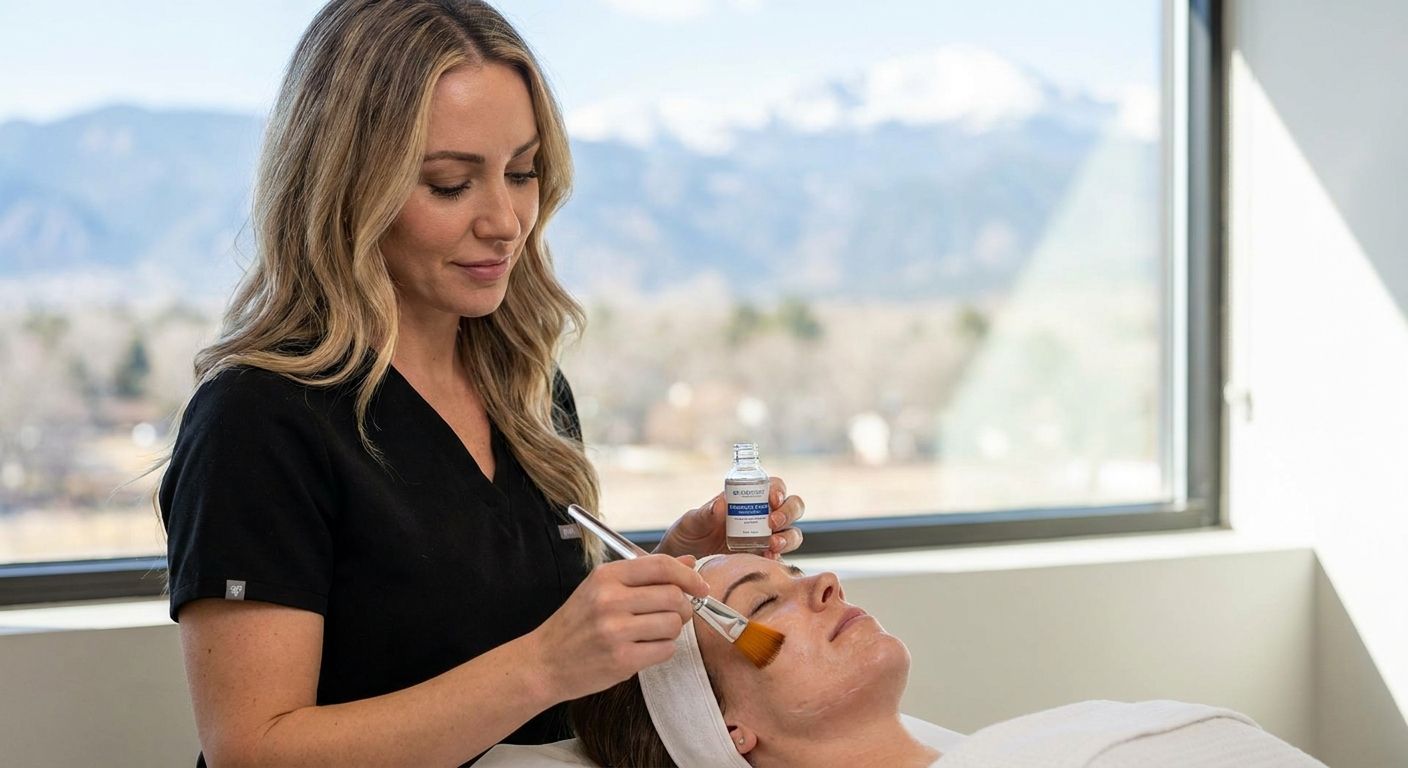
VI Peel — the safe pick. This medium-depth, hydroquinone-formulated peel is the standard first move for melasma and sun spots on most skin tones. Expect 3-5 days of visible peeling, with a series of 3 peels spaced 4 weeks apart for moderate pigmentation. Buy if this is your first professional peel.
TCA peel (20-35%) — the workhorse. Trichloroacetic acid peels penetrate deeper than glycolic formulas and are the go-to when superficial peels haven't moved stubborn dark patches. Downtime runs 5-7 days of peeling. Consider if you've already tried a lighter peel without results.
Jessner peel — the combination pick. Layered salicylic, lactic, and resorcinol acids let a provider customize depth in a single session, with 3-4 days of typical downtime. Consider if pigmentation and rough texture show up together.
Glycolic or lactic acid peel (30-70%) — the maintenance pick. These superficial peels have minimal downtime and work well as an upkeep layer between deeper treatments, but need monthly sessions over 4-6 months to visibly fade deeper spots on their own. Buy as maintenance, skip as a standalone fix for melasma.
Cosmelan-style peel — the intensive pick. This multi-day, at-home mask paired with an in-office application is the strongest option on this list for resistant melasma, with 7-10 days of flaking. Consider only with a provider who will supervise the homecare phase closely.
“A superficial peel won't touch melasma that survived a year of daily sunscreen; that's a TCA or Cosmelan conversation, not a glycolic one.”
What to avoid
- At-home peel kits above 30% acid. Colorado Springs' dry, high-altitude air already thins the skin barrier, and unsupervised strong acids raise the risk of chemical burns and rebound pigmentation.
- One-and-done deep peels for melasma. Melasma is hormonally and UV-driven, so a single aggressive peel without a maintenance plan tends to relapse within a season.
- Stacking a peel and a retinoid in the same week. Both increase cell turnover; combined, they spike irritation and can trigger new post-inflammatory dark spots instead of clearing old ones.
Ready to map out your peel plan?
Get a skin assessment before choosing a peel depth or series.
Verdict comparison
| Peel Type | Depth | Downtime | Sessions Needed | Best For | Verdict |
|---|---|---|---|---|---|
| VI Peel | Medium | 3-5 days | 3, spaced 4 weeks apart | First-time patients, melasma, sun spots | Buy |
| TCA (20-35%) | Medium-deep | 5-7 days | 1-2, spaced 6-8 weeks | Stubborn dark patches | Consider |
| Jessner | Customizable | 3-4 days | 2-3 | Pigmentation plus texture | Consider |
| Glycolic/Lactic (30-70%) | Superficial | 1-2 days | Monthly, 4-6 months | Maintenance only | Buy (as add-on) |
| Cosmelan-style | Deep | 7-10 days | 1 series, supervised homecare | Resistant melasma | Consider (with supervision) |
FAQ
What's the best chemical peel for hyperpigmentation in Colorado Springs in 2026?
The VI Peel is the best starting point for most sun spots and moderate melasma in 2026, with TCA peels stepping in for pigmentation that doesn't respond to lighter formulas. The right choice depends on how deep the pigmentation sits and your skin tone.
Is a chemical peel better than laser for dark spots?
Chemical peels tend to carry lower risk of rebound pigmentation on darker skin tones compared to some laser settings, while lasers can be more precise for isolated spots. A provider should match the tool to your Fitzpatrick type rather than defaulting to one technology.
How much downtime does a chemical peel for hyperpigmentation need?
Downtime ranges from 1-2 days for superficial glycolic peels to 7-10 days for deep Cosmelan-style peels. Medium peels like the VI Peel typically fall in the 3-5 day range.
How many chemical peel sessions do you need to see results?
Moderate hyperpigmentation usually needs a series of 3 VI Peels spaced 4 weeks apart, while deeper TCA peels may only need 1-2 sessions spaced 6-8 weeks apart. Melasma often needs an ongoing maintenance schedule beyond the initial series.
Can chemical peels treat melasma?
Yes, medium and deep peels like TCA and Cosmelan-style treatments are commonly used for melasma, but results depend heavily on a strict SPF and homecare routine afterward. Without maintenance, melasma tends to return within a season.
Is a chemical peel safe for darker skin tones?
Peels can be safe for Fitzpatrick IV-VI skin tones when depth and acid concentration are chosen carefully, but the risk of post-inflammatory hyperpigmentation from an overly aggressive peel is higher. Provider experience with darker skin tones matters more here than the specific peel brand.
How much does a chemical peel for hyperpigmentation cost in Colorado Springs?
Cost varies by peel depth and how many sessions your plan requires, since a single glycolic peel and a Cosmelan series are priced very differently. Ask for a quote based on your specific pigmentation during a consultation.
How soon will I see results after a chemical peel?
Superficial peels show brightening within days as flaking resolves, while deeper peels for melasma can take 4-8 weeks across a series before pigmentation visibly fades. Sun protection during the healing window determines whether those results hold.
One last thing
The detail most people skip: peeling season and sun-avoidance season aren't the same thing at altitude. Colorado Springs' UV index stays elevated well past the calendar seasons that feel "safe" for peeling at sea level, so scheduling a deep peel for early spring 2026 still means strict SPF discipline through summer to keep the fade.