PRP hair restoration for women uses your own concentrated platelets to wake up shrinking hair follicles, and it works best as a targeted plan, not a one-time fix. This guide breaks down what actually matters when you're choosing a PRP protocol for female hair thinning in 2026.
- PRP hair restoration for women needs 3-4 initial sessions spaced 4-6 weeks apart to show real density change.
- Bloodwork and a scalp diagnosis before treatment separates a real protocol from a spa gimmick — verdict: require it.
- PRP plus microneedling outperforms standalone PRP for early female pattern hair loss — Consider as the default combo.
- Skip any provider quoting a single-session 'cure' for hair thinning; androgenetic alopecia is progressive and needs maintenance.
- Luxus Aesthetics in Happy Valley, Oregon builds PRP hair restoration around diagnosis first, injections second.
Why this matters
Female pattern hair loss and postpartum shedding don't respond to the same generic "hair growth serum" marketing aimed at men. Women's hair loss is driven by hormonal shifts, thyroid changes, iron deficiency, and genetics working together, and a PRP protocol that ignores that mix wastes your time and money.
The American Academy of Dermatology cites androgenetic alopecia as affecting an estimated 30 million women in the U.S., often starting with diffuse thinning at the part line rather than a receding hairline. PRP hair restoration for women is designed to extend the growth phase of existing follicles before they miniaturize past the point of recovery — which is why timing and diagnosis matter more than the injection itself.
Who PRP hair restoration for women is actually for
This treatment fits women noticing diffuse thinning, a widening part, or postpartum shedding that hasn't resolved after 12 months — not women with fully bald patches or long-standing scarring alopecia. It's also a fit for women who've already ruled out thyroid or iron issues with bloodwork and want a non-surgical option before considering a hair transplant. If you're in early-to-moderate thinning (Ludwig scale I-II), you're the ideal candidate; later-stage loss with visible scalp shine responds far less predictably.
Luxus Aesthetics, a boutique medical spa in Happy Valley, Oregon, builds its PRP hair restoration around this candidacy question first, because the wrong candidate gets the wrong result no matter how good the injection technique is.
What to look for in PRP hair restoration for women
Diagnosis before injection
A provider who skips a scalp exam and bloodwork is guessing. Thyroid dysfunction, low ferritin, and autoimmune alopecia all mimic pattern hair loss but need different treatment entirely, and PRP won't fix a thyroid problem.
Session frequency and spacing
Published protocols for PRP in androgenetic alopecia typically run 3-4 sessions spaced 4-6 weeks apart, followed by maintenance every 4-6 months. A single session marketed as sufficient is a red flag for 2026 standards of care.
PRP preparation method
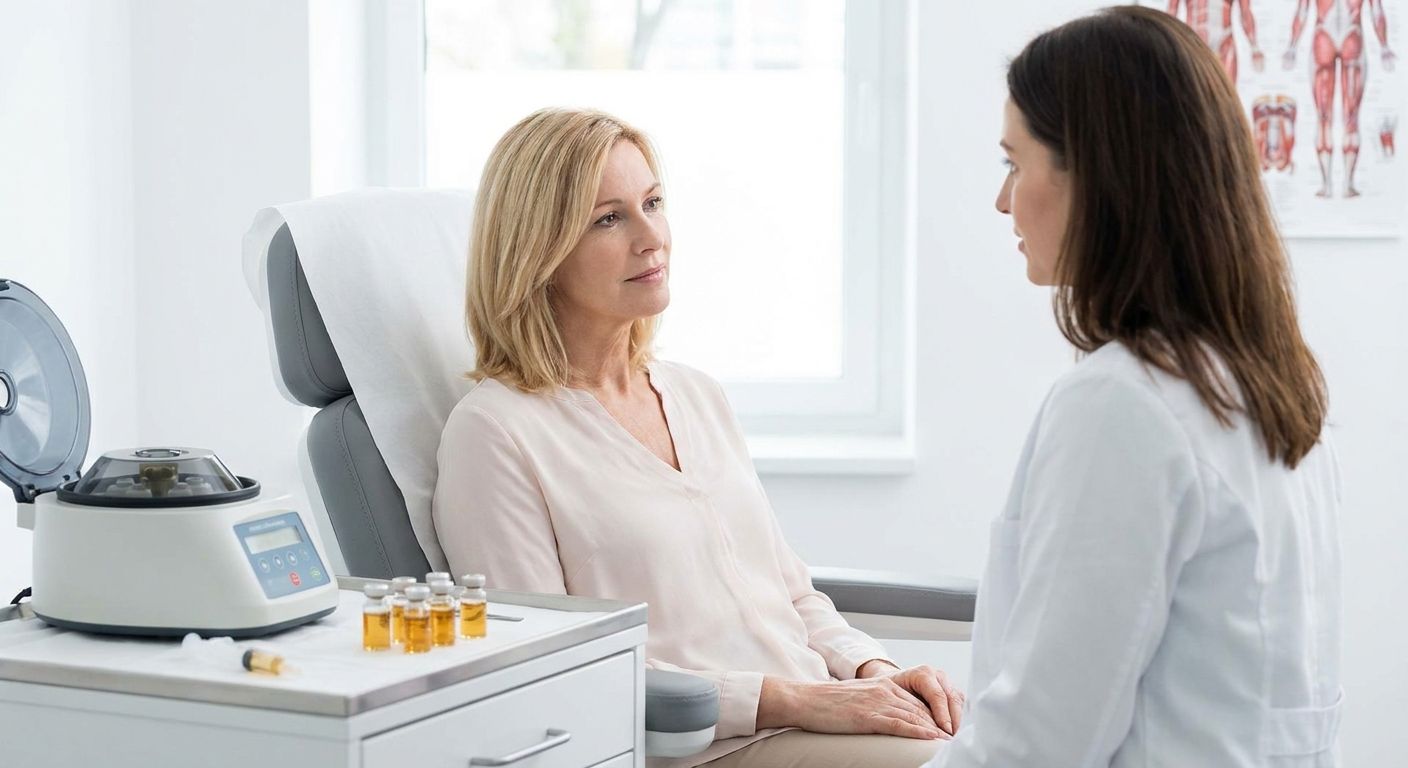
Platelet concentration depends on the centrifuge process — a proper double-spin protocol concentrates platelets well above baseline blood levels, while a cheap single-spin kit under-delivers the growth factors doing the actual work. Ask what system the provider uses.
Combination with microneedling
Microneedling creates micro-channels that let PRP's growth factors penetrate the scalp more evenly, and combined protocols are increasingly the default for diffuse thinning rather than PRP injections alone.
Provider experience with female-specific hair loss
Female pattern hair loss presents differently than male pattern baldness — diffuse rather than localized — and a provider who mostly treats male crown loss may under-treat the part line and frontal scalp where women thin first.
Realistic timeline for visible density
Most women see shedding reduction by 8-12 weeks and visible density change by month 4-6, not immediately after the first session. Anyone promising instant thickness after one treatment isn't setting honest expectations.
Protocol paths worth considering
Standalone PRP series — the baseline pick. Three to four sessions spaced monthly, no combination therapy. One spec that matters: platelet concentration from a proper double-spin draw, not a diluted single-spin. Works well for women in early diffuse thinning who want the simplest protocol. Consider.
PRP plus microneedling — the combo that's becoming the default. Adds micro-channeling to the same 3-4 session cadence, which improves growth-factor penetration across the scalp. Best fit for women with a widening part or crown thinning past early stage. Buy.
PRP for postpartum shedding — the patience play. Timed for women whose shedding hasn't resolved 12+ months after delivery, when hormonal hair loss should have already self-corrected. Requires bloodwork first to rule out postpartum thyroiditis or iron deficiency. Consider.
Single "refresher" session — the wildcard. Marketed as a touch-up between full series, useful only as maintenance after you've already completed an initial 3-4 session course. Treated as a standalone fix for new thinning, it underdelivers. Consider as maintenance, Skip as a first treatment.
PRP with no diagnostic workup — the one to walk away from. No bloodwork, no scalp exam, injections scheduled same-day as consultation. This skips the step that determines whether PRP will even work for your specific type of hair loss. Skip.
What to avoid
- A "one and done" sales pitch. PRP for hair loss is a series-based treatment; a provider selling a single session as a complete fix is selling you short on the biology.
- Skipped bloodwork. Thyroid panels and ferritin levels take one blood draw and rule out causes PRP can't touch — a provider who skips this step is guessing at your diagnosis.
- Undisclosed prep method. If a provider won't explain how the PRP is concentrated (single-spin vs double-spin), you can't verify you're getting a therapeutic platelet dose.
Talk through your hair loss pattern
Get a scalp assessment before committing to a PRP series in 2026.
Verdict comparison
| Protocol | Best for | Typical session count | Verdict |
|---|---|---|---|
| Standalone PRP series | Early diffuse thinning | 3-4 initial, then maintenance | Consider |
| PRP + microneedling | Widening part, crown thinning | 3-4 initial, then maintenance | Buy |
| Postpartum PRP series | Shedding past 12 months | 3-4 initial | Consider |
| Refresher session alone | Maintenance only | 1 session | Skip as first treatment |
| No-diagnostic PRP | Nobody | Variable | Skip |
FAQ
What is PRP hair restoration for women?
PRP hair restoration for women uses platelets concentrated from your own blood, injected into the scalp to extend the growth phase of thinning follicles. It's used for early-to-moderate female pattern hair loss and postpartum shedding, not full baldness.
How many PRP sessions do women need for hair loss?
Most protocols call for 3-4 initial sessions spaced 4-6 weeks apart, followed by maintenance every 4-6 months. Fewer sessions rarely produce visible density change.
Is PRP better than minoxidil for women's hair loss?
PRP and minoxidil target hair loss differently and many providers combine both rather than choosing one. PRP addresses follicle health directly through injected growth factors, while minoxidil works topically and daily.
How soon do you see results from PRP hair restoration?
Reduced shedding typically shows up by 8-12 weeks, with visible density change around month 4-6 after the initial session series. Results before that timeline aren't realistic to expect.
Does PRP hurt for hair restoration treatments?
PRP scalp injections cause mild discomfort, usually managed with a topical numbing cream applied before the session. Most women describe it as pressure and pinpricks rather than sharp pain.
Can PRP be combined with microneedling for hair loss?
Yes, and combining PRP with microneedling is increasingly the standard approach for diffuse thinning because the micro-channels improve growth-factor absorption. It follows the same 3-4 session cadence as standalone PRP.
Who is not a good candidate for PRP hair restoration?
Women with fully bald patches, long-standing scarring alopecia, or untreated thyroid and iron deficiencies are poor candidates until the underlying cause is addressed. PRP works on follicles that are shrinking, not follicles that are gone.
Does PRP hair restoration require maintenance?
Yes, most protocols call for maintenance sessions every 4-6 months after the initial series to sustain results. Hair loss is progressive, so stopping treatment entirely usually means gradual reversal of gains.
One last thing
The variable that separates a PRP session that works from one that doesn't isn't the needle — it's the centrifuge. A double-spin draw concentrates platelets well above what a single-spin kit produces, and that concentration is what drives follicle response. Ask directly how your PRP is prepared before you book anything in 2026; it matters more than the number of sessions on the package.